SHOULDER | RENTON & MAPLE VALLEY
Total Shoulder Replacement
Total shoulder replacement, also called anatomic total shoulder arthroplasty, replaces the arthritic ball and socket of the shoulder with implants that recreate the joint’s natural shape, relieving pain while preserving the shoulder’s normal mechanics.
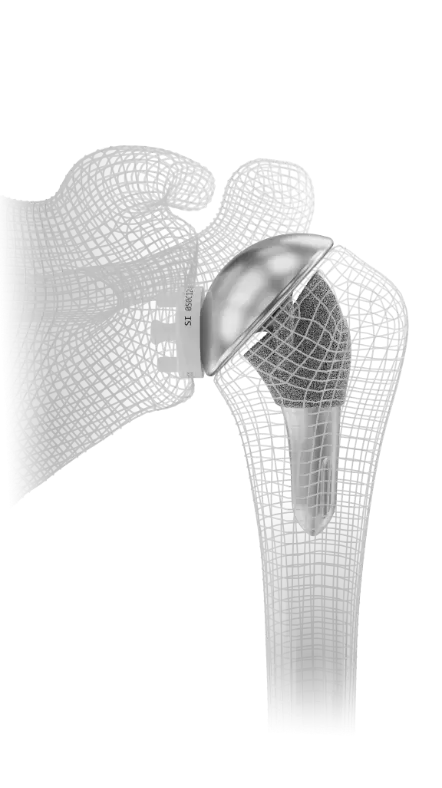
Shoulder arthritis wears away the smooth cartilage that lets the joint glide. What remains is bone on bone: stiffness, grinding, and a deep ache that tends to grow over years. When that arthritis has an otherwise healthy shoulder around it, especially an intact rotator cuff, anatomic total shoulder replacement is often the operation of choice, because it restores the joint the way it was designed.
How an Anatomic Replacement Works
The shoulder is a ball-and-socket joint. In an anatomic total shoulder replacement, Dr. Lyons replaces the worn humeral head with a polished metal ball, sized and positioned to match your anatomy, and resurfaces the socket with a smooth, durable plastic component. Your own rotator cuff muscles continue to power and stabilize the joint, which is why the health of the cuff is central to choosing this procedure.
Is a Partial Replacement Ever an Option?
In select situations, only the ball side of the joint is replaced, a procedure called hemiarthroplasty. It is used less often than full replacement, but for certain patterns of damage it can be appropriate. Dr. Lyons will explain the reasoning if it applies to your shoulder.
Who Is a Candidate?
Anatomic total shoulder replacement is typically considered for patients with:
- Osteoarthritis of the shoulder with an intact, functioning rotator cuff
- Inflammatory arthritis, such as rheumatoid arthritis, in appropriate cases
- Avascular necrosis of the humeral head
- Pain and stiffness that persist despite therapy, medications, and injections
Modern implant designs and careful preoperative planning, often including CT-based imaging, allow the components to be matched closely to each patient’s anatomy, including shoulders with socket wear that once made replacement more difficult.
The InSet® Total Shoulder System
Dr. Lyons performs anatomic total shoulder replacement using the InSet® system from Shoulder Innovations, and the design is worth understanding because it addresses the historical weak point of anatomic replacement.
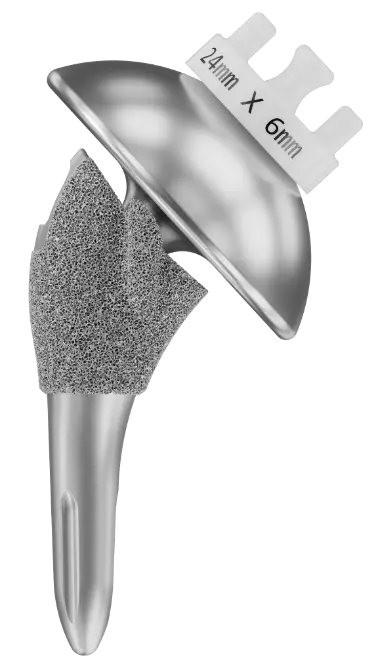
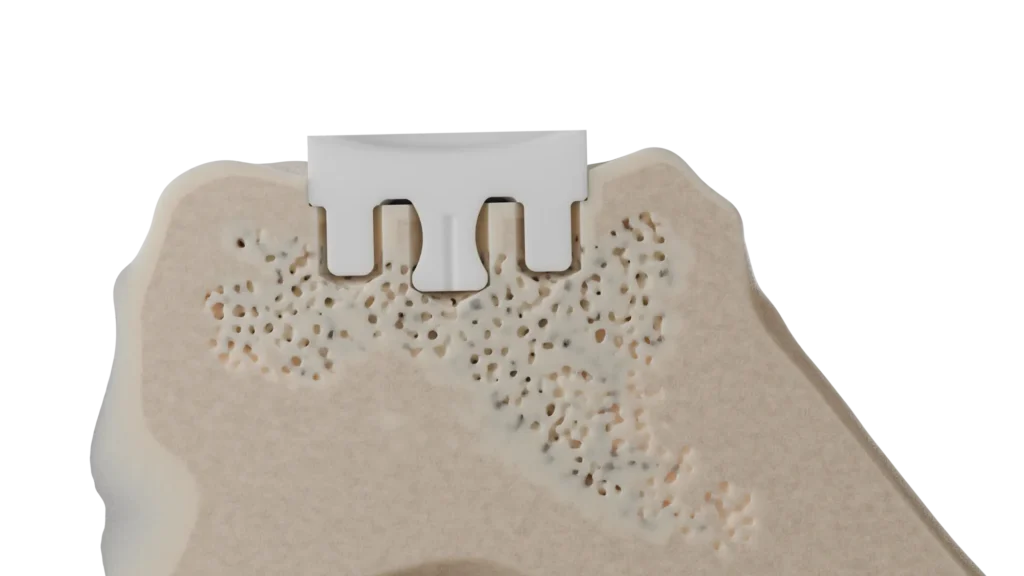
In a conventional anatomic replacement, the plastic socket component sits on the prepared surface of the glenoid, an “onlay” position. Over years of use, rocking forces at that interface can loosen the component, and glenoid loosening has long been the most common reason anatomic replacements are revised. The InSet design takes a different approach: the socket component is recessed into the glenoid, seated within the denser supporting bone rather than perched on top of it. Biomechanical testing and peer-reviewed follow-up studies of this design have focused on exactly that loosening problem, and reducing those edge-loading stresses is the design’s central purpose.
The humeral side uses a bone-preserving titanium stem with a fin design and a roughened porous coating intended to encourage your own bone to grow into the implant. Preserving humeral bone is a long-horizon decision: if your shoulder ever needs a revision or conversion to a reverse replacement many years from now, the bone that was not removed today is what makes that future surgery simpler.
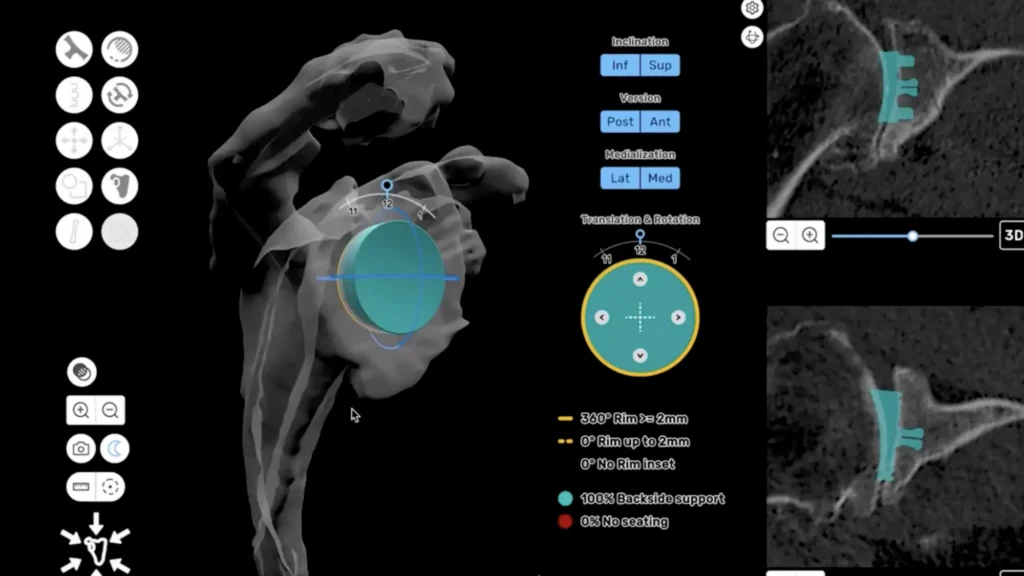
Each case is planned in advance with ProVoyance®, the system’s CT-based software, which builds a three-dimensional model of your shoulder so component size and position are determined before surgery.
The Surgical Experience
The procedure usually takes one to two hours under a nerve block with anesthesia. Many patients are surprised at how manageable the early days are with a modern multimodal pain plan, though everyone’s experience differs. Depending on your health, surgery may be outpatient or involve a short stay. You will go home in a sling with clear instructions and a scheduled path into physical therapy.
Recovery and Returning to Life
Recovery unfolds in phases: protecting the repair in the early weeks, restoring motion, and then rebuilding strength. Most patients work with a physical therapist over several months, and many gradually return to activities like swimming, golf, and gardening as strength returns. Your timeline will depend on your shoulder, your health, and how the tissues heal; Dr. Lyons and your therapist will guide the progression rather than the calendar.
Frequently Asked Questions
What is a total shoulder replacement?
A total shoulder replacement replaces both sides of an arthritic shoulder joint: a metal ball replaces the humeral head, and a plastic component resurfaces the socket. It is designed to relieve pain and restore smoother motion.
How is anatomic different from reverse replacement?
An anatomic replacement recreates the shoulder’s normal ball-and-socket arrangement and relies on your rotator cuff. A reverse replacement swaps the ball and socket positions so the deltoid muscle can power the arm when the cuff is damaged.
How long is recovery from total shoulder replacement?
Most patients wear a sling for the first several weeks and progress through therapy over several months. Many daily activities return gradually during the first few months, with continued improvement often seen up to a year. Individual timelines vary.
Will I be able to use my arm normally again?
The goal of surgery is meaningful pain relief and improved function for daily activities. What is achievable depends on your shoulder’s starting point, and Dr. Lyons will discuss realistic expectations for your situation before surgery.
What is the InSet® glenoid and why does it matter?
The InSet® glenoid is a socket component that is recessed into the supporting bone of the glenoid rather than placed on its surface. The design was developed to address glenoid loosening, the most common long-term reason anatomic shoulder replacements are revised.
If arthritis is wearing your shoulder down, find out where you stand. Request an evaluation with Dr. Lyons in Renton or Maple Valley.
Take the Next Step
Request an appointment at the Renton or Maple Valley office.