ELBOW | RENTON & MAPLE VALLEY
Elbow Arthroscopy for Arthritis and Stiffness
Elbow arthroscopy is minimally invasive surgery using a small camera to remove bone spurs and loose bodies, and to release scarred tissue, treating elbow arthritis, stiffness, and mechanical catching while preserving the joint.
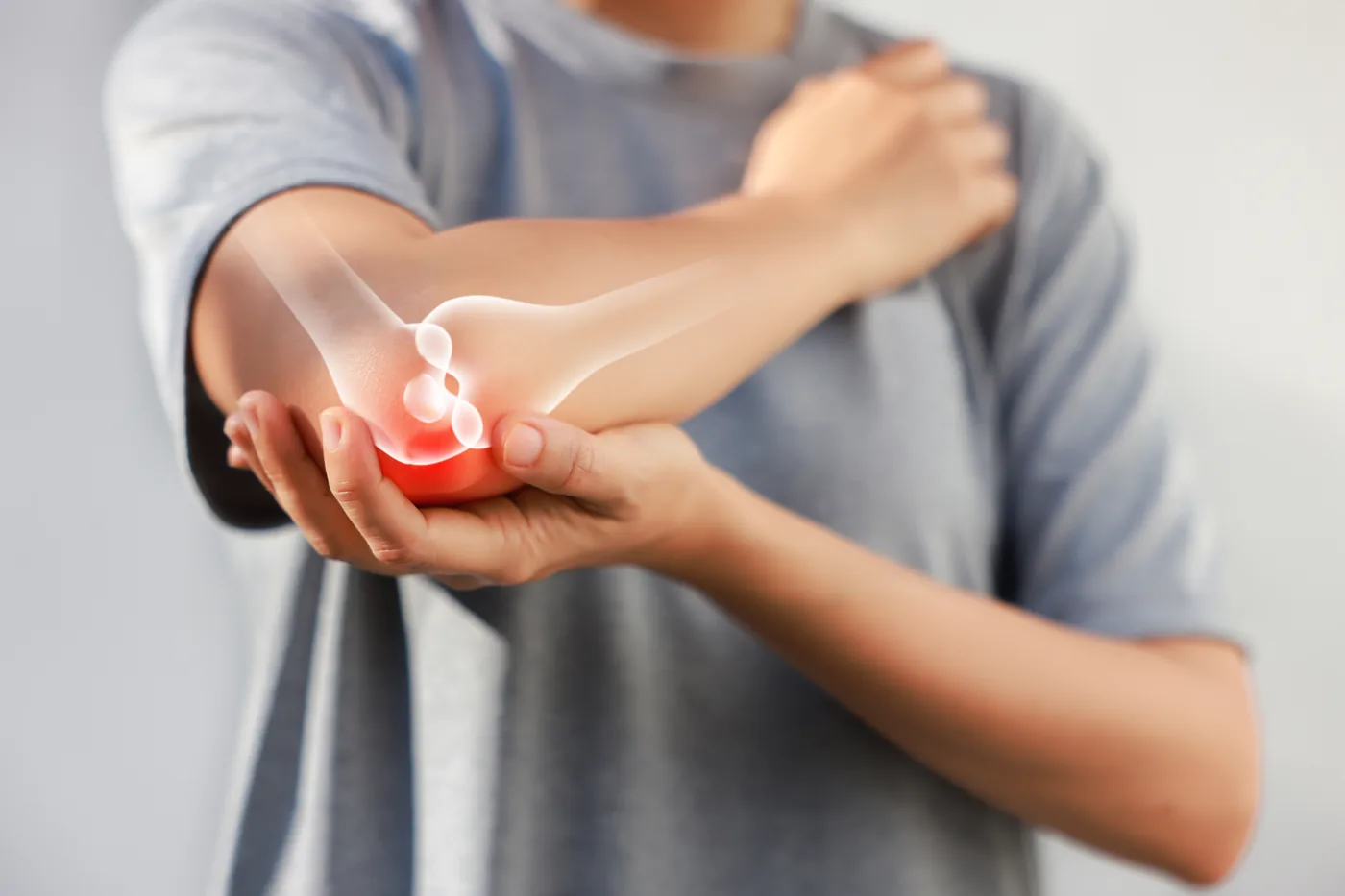
Elbow arthritis behaves differently than arthritis elsewhere. Instead of the constant ache of an arthritic knee, it often shows up as lost motion, an elbow that will not fully straighten or bend, sharp pain at the end points of movement, and episodes of catching or locking when a loose fragment gets caught in the joint. It is common in people who have worked hard with their arms: tradespeople, weightlifters, former throwers and wrestlers. And because these patients are often decades younger than typical joint replacement age, joint-preserving treatment matters.
What Arthroscopy Can Do for an Arthritic Elbow
Through a few small incisions, Dr. Lyons can address the specific mechanical problems driving symptoms:
- Remove osteophytes (bone spurs) that block motion at the front and back of the joint
- Retrieve loose bodies, the fragments of cartilage or bone that cause catching and locking
- Release the contracted capsule, the scarred envelope of the joint that restricts motion
- Debride inflamed tissue contributing to pain
The goal is honest and specific: better motion, fewer mechanical symptoms, and less pain at the extremes, while keeping your own joint. Arthroscopy does not regrow cartilage, and Dr. Lyons will be clear about what it can and cannot change in your elbow.
Stiff Elbow Without Arthritis
Stiffness can also follow fractures, dislocations, or prolonged immobilization, even when cartilage is healthy. A contracted capsule and scar tissue are frequently the culprits. When months of therapy and splinting have plateaued, arthroscopic release of the contracture can restore functional motion. The most useful arc for daily life runs from about 30 degrees short of straight to 130 degrees of bend; falling short of that range is where surgery earns consideration.
What to Expect
Elbow arthroscopy is typically an outpatient procedure. Recovery emphasizes early motion, this is one operation where moving soon after surgery is central to the result, often supported by therapy and sometimes splinting programs. Most patients resume light daily activities quickly, with fuller activity returning over weeks to a few months depending on what was done.
Frequently Asked Questions
What does elbow arthroscopy involve?
A surgeon inserts a small camera and instruments through incisions of roughly a half centimeter, then removes bone spurs and loose fragments and releases scar tissue as needed. It is usually an outpatient procedure.
Can elbow arthritis be treated without a joint replacement?
Often, yes. For many active patients, arthroscopic removal of spurs and loose bodies plus capsular release improves motion and mechanical symptoms while preserving the natural joint. Replacement is generally reserved for older, lower-demand patients with advanced disease.
Why won't my elbow straighten all the way?
Common causes include bone spurs blocking the joint, a contracted capsule after injury, or loose fragments. An exam with X-rays, and often a CT scan, identifies which is responsible and whether release is likely to help.
How soon can I move my arm after elbow arthroscopy?
Early motion is usually encouraged within days, and is a core part of the recovery plan. Your specific protocol depends on what was done during surgery.
An elbow that catches, locks, or will not straighten deserves more than living around it. Request an evaluation in Renton or Maple Valley.
Take the Next Step
Request an appointment at the Renton or Maple Valley office.