SHOULDER | RENTON & MAPLE VALLEY
Massive and Irreparable Rotator Cuff Tears
An irreparable rotator cuff tear is a large, often long-standing tear whose tendon has retracted or degenerated beyond direct repair. Options include tendon transfer procedures and reverse shoulder replacement, matched to the patient’s age, anatomy, and goals.
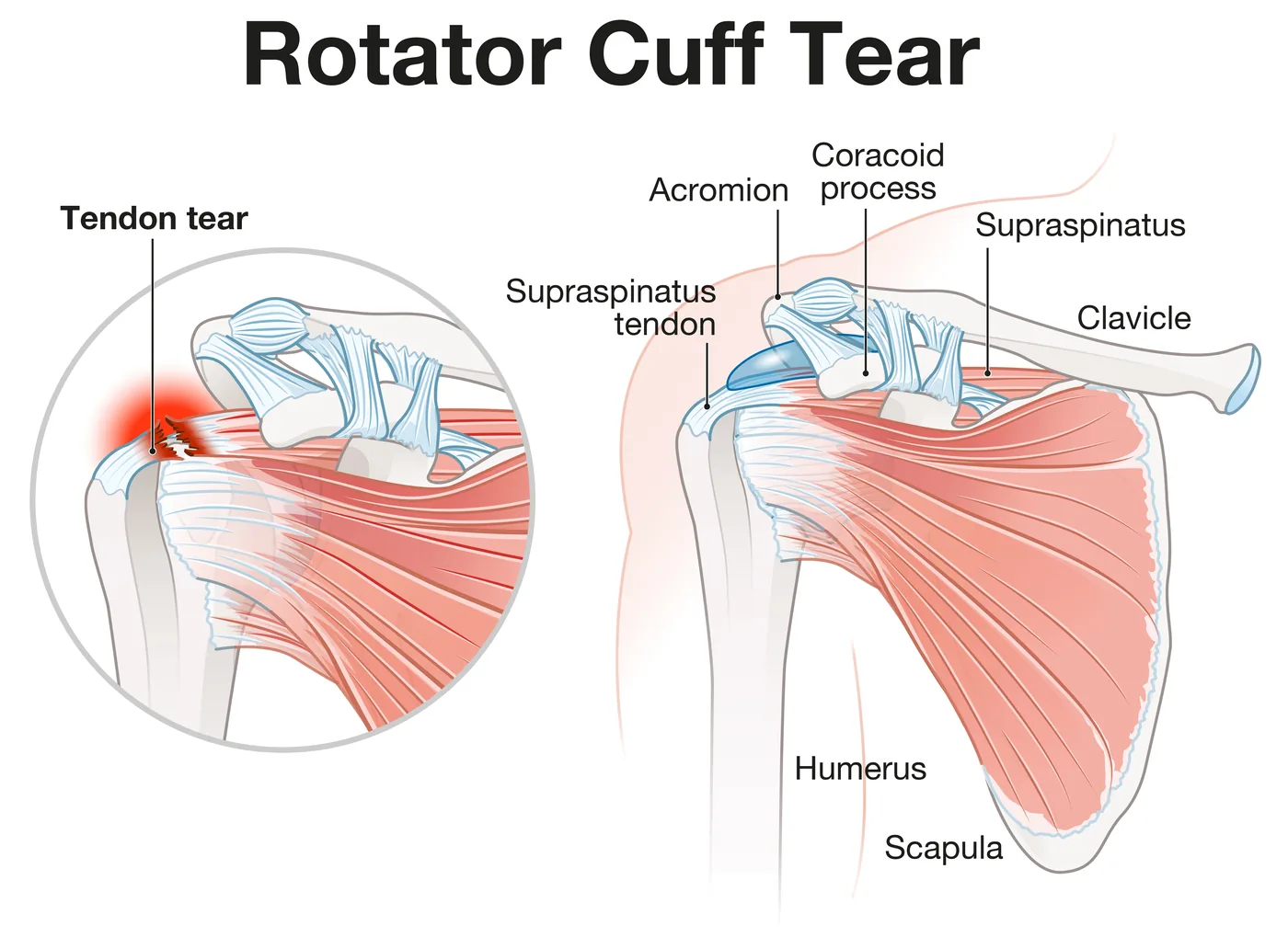
Being told a tear is “irreparable” is discouraging, but the word sounds more final than it usually is. What it actually means is that one particular operation, direct repair, is no longer dependable for your tendon. It does not mean your shoulder is out of options. This is a specific area of focus in Dr. Lyons’ practice, and the modern toolkit for these shoulders is deeper than most patients have been led to believe.
What Makes a Tear Irreparable?
When a cuff tendon tears and time passes, three things can happen: the tendon retracts toward the socket like a released rubber band, the muscle belly wastes and infiltrates with fat, and the tissue itself becomes thin and fragile. Past a certain point, pulling the tendon back to the bone either is not physically possible or is unlikely to hold. Imaging, particularly MRI, along with your exam, tells Dr. Lyons where your tear sits on that spectrum. Some tears labeled irreparable elsewhere can in fact be repaired or partially repaired; the assessment is worth making carefully.
Option One: Tendon Transfer
For younger, active patients without significant arthritis, a tendon transfer can restore lost function by rerouting a healthy nearby tendon to do the job of the damaged one. Depending on the tear pattern, transfers may use the latissimus dorsi or lower trapezius for tears in the back of the cuff, or a pectoralis-based transfer for tears in the front. The transferred tendon takes on a new role, and a dedicated rehabilitation program teaches the shoulder to use it. Tendon transfer is a specialized procedure that requires dedicated training, and candidacy depends on the specific muscles involved, your age, and your demands.
Option Two: Reverse Total Shoulder Replacement
When an irreparable tear is accompanied by arthritis, pseudoparalysis (the arm will not actively lift despite free passive motion), or simply an older, lower-demand shoulder, reverse total shoulder replacement is often the more predictable answer. Because the reverse design does not depend on the cuff at all, it addresses the mechanical problem directly. The reverse shoulder replacement page explains the procedure in detail.
Other Tools in the Toolkit
Depending on the shoulder, additional options can include partial repair, biceps tendon procedures, and arthroscopic debridement aimed at pain relief. Superior capsular reconstruction, a graft-based technique, has been used for select tears, and Dr. Lyons can discuss the current evidence on where it does and does not make sense.
How the Decision Gets Made
Age, arthritis, remaining cuff muscles, bone quality, and what you actually need your shoulder to do: these drive the recommendation. A manual laborer of 52 and a retiree of 74 with identical MRIs may reasonably receive different advice. Expect a candid conversation about trade-offs rather than a one-size answer.
Frequently Asked Questions
What does an irreparable rotator cuff tear mean?
It means the torn tendon has retracted or degenerated to the point where sewing it back to the bone is unlikely to succeed. It does not mean the shoulder cannot be helped by other procedures.
What is a tendon transfer for the shoulder?
A tendon transfer reroutes a healthy tendon, such as the lower trapezius or latissimus dorsi, to take over the function of an irreparable rotator cuff tendon. It is typically offered to younger, active patients without significant arthritis.
Is reverse shoulder replacement the only option for a massive tear?
No. Depending on your age, arthritis, and function, options can include tendon transfer, partial repair, and arthroscopic procedures aimed at pain relief. Reverse replacement is often preferred when arthritis or pseudoparalysis is present.
Can a massive tear cause arthritis?
Yes. A long-standing large tear changes the mechanics of the joint and can lead to a specific pattern of arthritis called cuff tear arthropathy, one of the main reasons reverse replacement was developed.
If you have been told your tear cannot be fixed, it is reasonable to want a thorough assessment of all the options. Request a consultation with Dr. Lyons in Renton or Maple Valley.
Take the Next Step
Request an appointment at the Renton or Maple Valley office.