PATIENT RESOURCES
Shoulder Arthritis: Understanding It, Treating It, and Knowing When Surgery Makes Sense
Shoulder arthritis is the loss of the smooth cartilage that lines the shoulder joint, causing pain, stiffness, and grinding. Treatment progresses from activity modification, therapy, and injections to shoulder replacement when symptoms no longer respond.
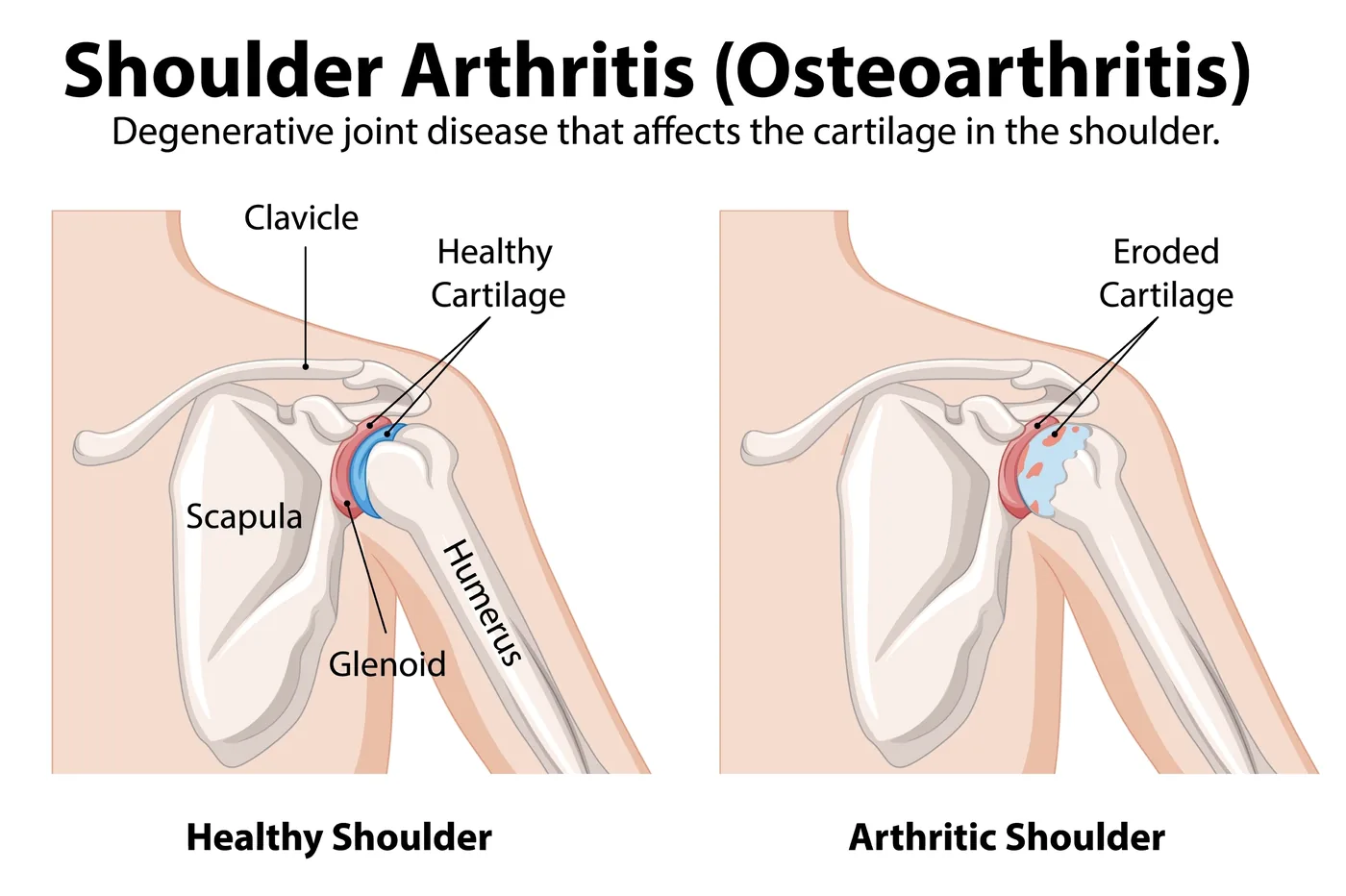
Shoulder arthritis sneaks up on people. It rarely announces itself with an injury; instead the shoulder gradually stiffens, deep aching creeps into more of the day, and one morning you notice you have quietly stopped reaching for things overhead. If that trajectory sounds familiar, understanding what is happening in the joint, and the full menu of treatments, puts you back in charge of the timeline.
What Is Happening in the Joint
The ball and socket of your shoulder glide on articular cartilage. Arthritis is the wearing of that surface: cartilage thins, the joint space narrows, bone spurs form around the edges, and the once-smooth glide becomes friction. Osteoarthritis is the most common form; arthritis can also follow old injuries or surgeries, inflammatory disease like rheumatoid arthritis, avascular necrosis, or long-standing massive rotator cuff tears, a distinct pattern called cuff tear arthropathy that changes the surgical answer.
The Symptoms That Bring People In
A deep ache in the shoulder that worsens with use, stiffness that steals motion month by month, grinding or clicking with movement, night pain that interrupts sleep, and the slow shrinking of what you attempt: hair washing, back pockets, high shelves. Arthritis symptoms famously wax and wane, which fools people into waiting through flare after flare. The pattern to watch is the trend across seasons, not the good week.
Nonsurgical Treatment Comes First
Most shoulder arthritis is managed without surgery for years, and doing it well is worth the effort:
- Activity modification that trades provocation for function, without surrendering the activities that make life good
- Physical therapy to maintain motion and strengthen the muscles that unload the joint
- Anti-inflammatory medications, used judiciously with your primary doctor’s input
- Corticosteroid injections for flares, which can settle a painful joint meaningfully, with sensible limits on frequency
- Heat, ice, and sleep positioning, unglamorous and repeatedly useful
What does not change the trajectory: cartilage does not regrow, and current evidence does not support injections marketed as regenerative as a means of reversing arthritis. You deserve honesty about that distinction between managing symptoms and altering the disease.
When to Start the Surgery Conversation
There is no lab value that says “now.” The signals that reliably matter: pain that intrudes on sleep most nights, function loss that changes how you live or work, imaging showing advanced wear, and diminishing returns from injections and therapy. When those line up, a consultation does not commit you to surgery; it informs the decision you were already making. For shoulders with an intact rotator cuff, anatomic total shoulder replacement is typically discussed; for arthritis with cuff damage, reverse replacement. Both paths are covered in depth on their pages.
Frequently Asked Questions
What does shoulder arthritis feel like?
Typically a deep ache in the joint with use, progressive stiffness, grinding sensations, and night pain. Symptoms often fluctuate, with flares and quieter stretches, while overall motion slowly declines.
Can shoulder arthritis be cured without surgery?
No treatment regrows lost cartilage. Nonsurgical care, therapy, activity changes, medications, and injections, can manage symptoms well for years, and surgery exists for the point when it no longer does.
How is shoulder arthritis diagnosed?
An exam plus standard X-rays usually confirms it; X-rays show joint space narrowing and bone spurs. CT or MRI is added when the rotator cuff or bone anatomy needs a closer look before treatment decisions.
When should I consider shoulder replacement?
When pain regularly disrupts sleep, daily function keeps shrinking, and injections and therapy no longer hold, that combination is the traditional signal to evaluate replacement seriously.
You do not have to wait until the shoulder forces the issue. An evaluation clarifies where your joint stands and how to protect the years ahead. Request an appointment in Renton or Maple Valley.
Take the Next Step
Request an appointment at the Renton or Maple Valley office.