SHOULDER | RENTON & MAPLE VALLEY
Shoulder Instability and Bone Loss
Shoulder instability is a condition in which the ball of the shoulder slips partially or fully out of its socket. Treatment ranges from therapy to arthroscopic labral repair to bone-restoring procedures such as the Latarjet, depending on the damage and the patient’s sport and goals.
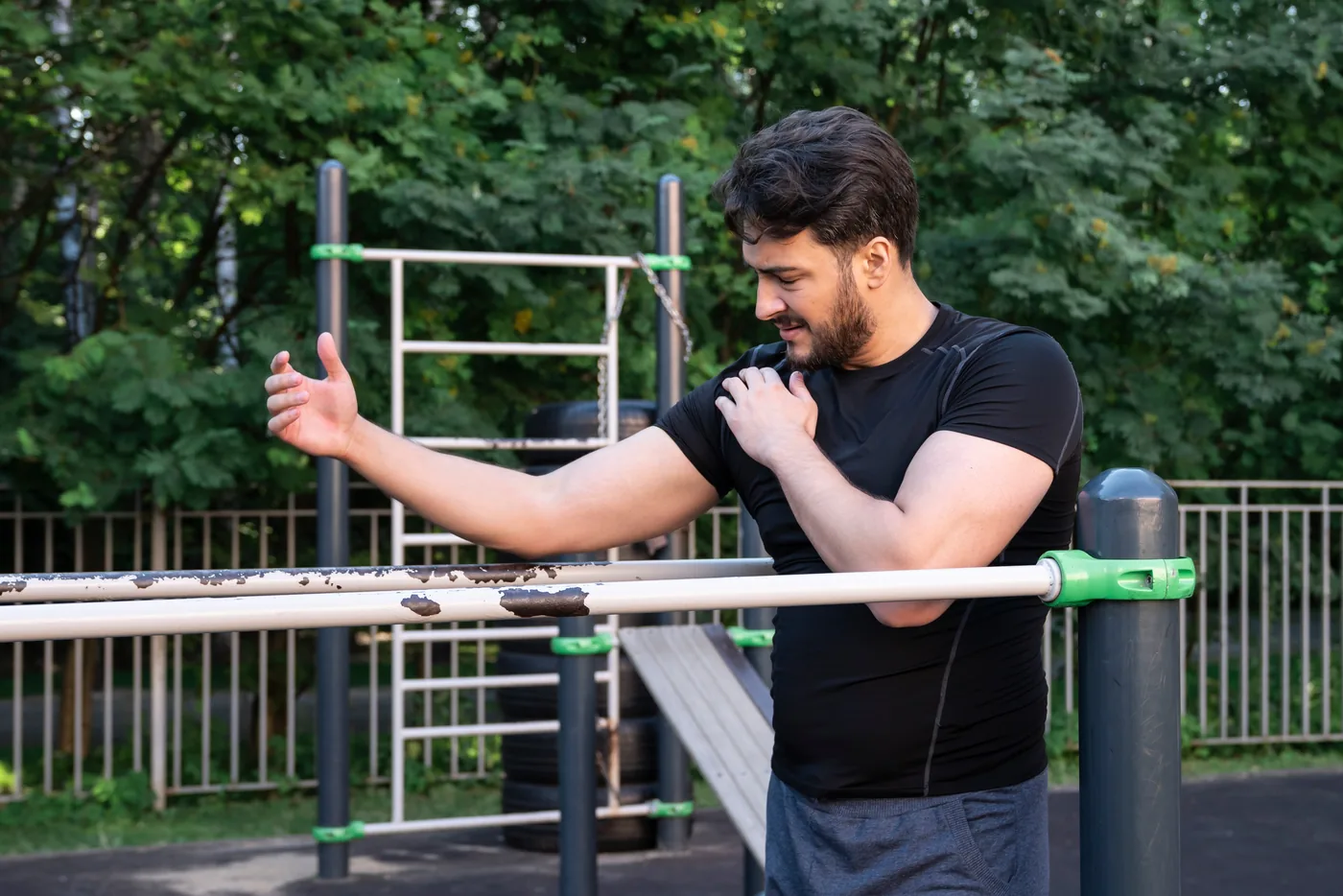
The first dislocation is dramatic. What surprises many patients is what comes after: a shoulder that no longer feels trustworthy, that apprehends every throwing motion or overhead reach, and that may slip again with less and less provocation. Each instability episode can add damage, and in young athletes especially, the pattern tends to repeat. Getting ahead of that cycle is the entire point of modern instability care.
Why Shoulders Become Unstable
The shoulder trades stability for motion; a shallow socket gives you the most mobile joint in the body. Stability comes from the labrum, a ring of cartilage that deepens the socket, along with ligaments and muscle. A dislocation typically tears the labrum from the socket rim (a Bankart tear). With repeated episodes, something more consequential can happen: the rim of the socket itself wears or breaks away, and a divot forms in the back of the ball (a Hill-Sachs lesion). Once meaningful bone is lost, soft tissue repairs alone become less dependable.
Assessing Your Shoulder Properly
This is why a careful workup matters. Dr. Lyons combines your dislocation history, exam findings, and advanced imaging, often including CT with specialized measurements of the socket, to quantify bone loss and identify engaging lesions. That assessment sorts patients into fundamentally different treatment paths, and skipping it is how instability surgeries fail.
Treatment Options
Arthroscopic Labral (Bankart) Repair
For first-time or early recurrent dislocators with minimal bone loss, arthroscopic repair reattaches the torn labrum and retensions the ligaments through small incisions. See the labral repair page for details.
The Latarjet Procedure and Bone Augmentation
When socket bone loss crosses a critical threshold, or when a prior repair has failed, the Latarjet procedure transfers a small piece of bone (the coracoid) with its attached tendon to the front of the socket. This rebuilds the missing rim and adds a dynamic muscular sling, addressing instability through more than one mechanism. In select cases, other bone graft options can serve a similar role. These procedures are a specific focus of Dr. Lyons’ practice.
Addressing the Ball Side
Large Hill-Sachs lesions that engage the socket rim may be treated during surgery with techniques such as remplissage, in which soft tissue is fixed into the defect to keep it from catching.
Returning to Sport and Activity
The purpose of stabilization is confidence: a shoulder you stop thinking about. Return to sport follows a structured progression through motion, strengthening, and sport-specific work, with timelines depending on the procedure performed and the demands of your sport. Dr. Lyons will be clear about what your specific plan involves before you decide on surgery.
Frequently Asked Questions
What is shoulder instability?
Shoulder instability means the ball of the joint slips partially (subluxation) or completely (dislocation) out of the socket, usually after an injury tears the stabilizing labrum and ligaments.
When is the Latarjet procedure needed?
The Latarjet is generally recommended when there is significant bone loss on the socket, when an engaging Hill-Sachs lesion is present, or when a previous soft tissue repair has failed.
Can shoulder instability be treated without surgery?
Sometimes. Therapy focused on strength and control can be appropriate, particularly for some first-time dislocators and patients with looser joints rather than traumatic tears. Recurrence risk is highest in young contact athletes, which shapes the recommendation.
Does every dislocation cause bone loss?
No, but repeated dislocations make bone loss more likely, and bone loss makes further dislocations more likely. That cycle is why recurrent instability deserves imaging that measures bone, not just soft tissue.
If your shoulder has dislocated more than once, or you no longer trust it, an instability-focused evaluation is the next step. Request an appointment in Renton or Maple Valley.
Take the Next Step
Request an appointment at the Renton or Maple Valley office.