SHOULDER | RENTON & MAPLE VALLEY
Reverse Total Shoulder Replacement
Reverse total shoulder replacement is a shoulder replacement in which the ball and socket switch sides, allowing the deltoid muscle to lift the arm when the rotator cuff is torn or deficient. It is used for cuff tear arthropathy, massive irreparable cuff tears, and certain fractures.
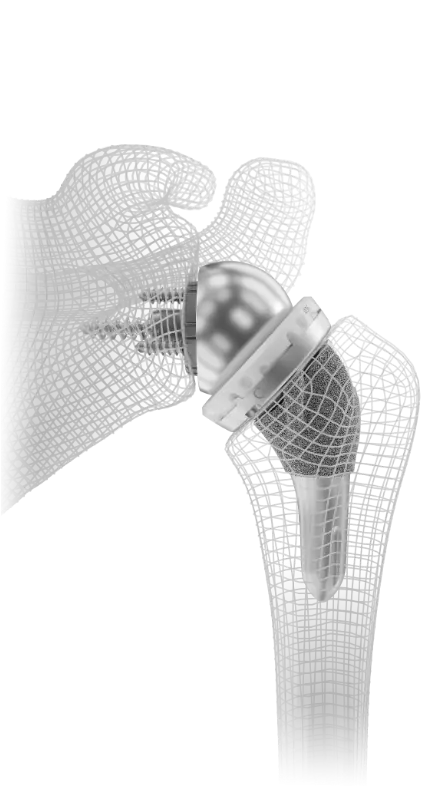
For decades, patients with both arthritis and a badly damaged rotator cuff had no good surgical answer. A standard replacement depends on the cuff, and theirs no longer worked. The reverse total shoulder replacement changed that, and it has become one of the most important developments in modern shoulder surgery. If you have been told your shoulder involves both arthritis and rotator cuff damage, reverse replacement is one of the main options your evaluation will explore, and it is a core focus of Dr. Lyons’ practice.
Why "Reverse"?
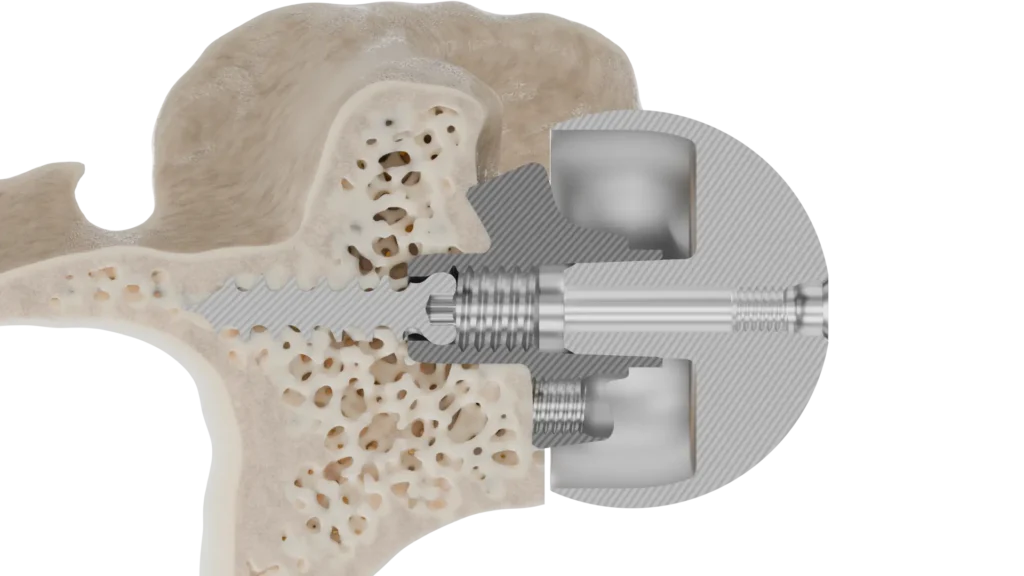
In your natural shoulder, the ball sits on the arm bone and the socket on the shoulder blade. A reverse replacement flips them: a metal half-sphere is fixed to the shoulder blade, and a socket-shaped component sits on top of the arm bone. This changes the mechanics of the joint so that the deltoid, the large muscle draping your shoulder, can raise the arm without needing a working rotator cuff. The design turns a muscle you still have into the engine of your shoulder.
Conditions a Reverse Replacement Treats
- Rotator cuff tear arthropathy: arthritis that develops after a long-standing large cuff tear
- Massive, irreparable rotator cuff tears with pain and loss of active motion, even without arthritis
- Complex fractures of the upper arm bone, particularly in older adults (covered in detail on the fracture page)
- Failed prior shoulder surgery, including revision of an earlier replacement
- Severe arthritis with significant bone wear where an anatomic socket cannot be reliably supported
The InSet® Reverse Shoulder System
Dr. Lyons performs reverse replacement using the InSet® reverse system from Shoulder Innovations. Two aspects of the system shape how he plans and performs the operation.
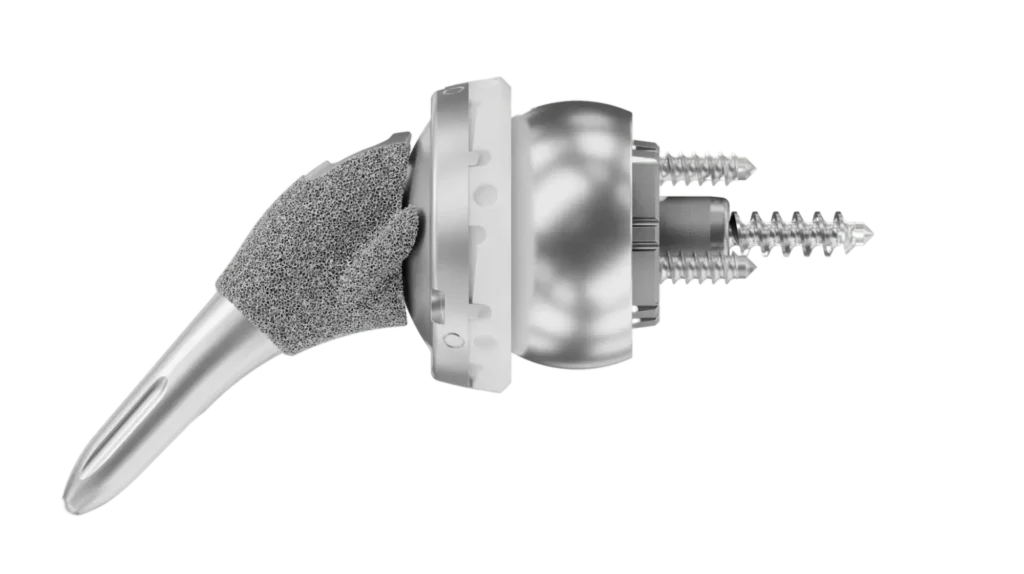
First, bone preservation. The system’s humeral component uses a bone-preserving titanium stem with curved fins and a porous titanium coating designed to encourage your bone to grow into the implant, and its glenoid components come in configurations selected to limit how much bone must be removed to seat them. Keeping bone in reserve matters most to the patient you will be fifteen or twenty years from now: if a revision is ever recommended, preserved bone is what gives that future surgeon good options.
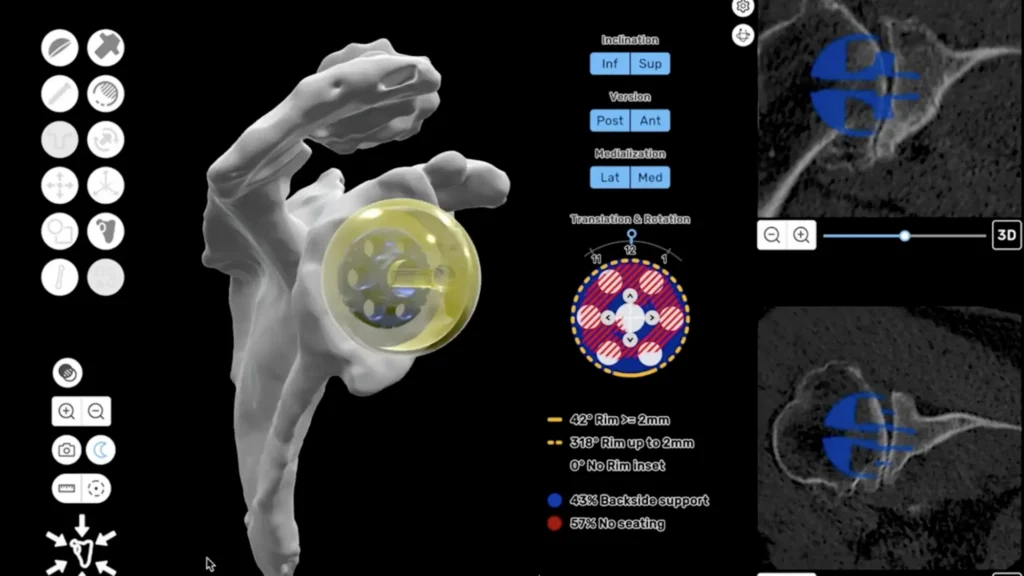
Second, planning. Every case is mapped in advance with ProVoyance®, the system’s CT-based planning software, which converts your CT scan into a three-dimensional model of your shoulder. Component position drives how a reverse replacement moves and how stable it is, so deciding size and placement on a precise model of your anatomy before surgery, rather than estimating in the operating room, is central to how Dr. Lyons approaches these cases.
What to Expect from Surgery
The operation typically takes one to two hours under a regional nerve block with anesthesia. Working from the preoperative plan, Dr. Lyons reconstructs the joint through a single incision at the front of the shoulder. Hospital stay, if any, is usually brief, and many patients go home the same or next day depending on their health.
Recovery After Reverse Replacement
Reverse replacement recoveries are often more comfortable early on than patients expect, in part because the arthritis pain is addressed at its source. A sling protects the shoulder for the first weeks, then motion and strengthening build progressively with a therapist. Many patients find that reaching overhead, lifting light objects, and sleeping become easier as recovery progresses. There are permanent sensible-use guidelines after a reverse replacement, particularly around heavy repetitive lifting, and Dr. Lyons will be straightforward with you about them.
Frequently Asked Questions
What is reverse shoulder replacement surgery?
Reverse shoulder replacement is a joint replacement in which the ball is attached to the shoulder blade and the socket to the arm bone, the opposite of natural anatomy. This lets the deltoid muscle move the arm when the rotator cuff cannot.
Why would I need a reverse instead of a standard replacement?
A standard (anatomic) replacement depends on a healthy rotator cuff. If your cuff is badly torn or nonfunctional, a reverse design works around it. Your exam and imaging tell your surgeon which situation you are in.
What can I expect after reverse shoulder replacement?
Expect a sling for the first several weeks, a guided therapy program, and gradual return of everyday function over several months. Most patients are given some permanent guidelines about very heavy or repetitive lifting.
Can a reverse replacement fix a rotator cuff tear?
It does not repair the torn tendons. Instead, it changes the joint’s mechanics so the shoulder no longer depends on them. For many irreparable tears, that makes it the more reliable solution than attempting a repair.
What implant system is used for reverse replacement?
Dr. Lyons uses the InSet® reverse shoulder system from Shoulder Innovations, which pairs bone-preserving components with CT-based three-dimensional planning of each case before surgery.
If you have been told your shoulder problem involves both the joint and the rotator cuff, an evaluation can clarify your options. Request an appointment with Dr. Lyons in Renton or Maple Valley.
Take the Next Step
Request an appointment at the Renton or Maple Valley office.