KNEE | RENTON & MAPLE VALLEY
Meniscus Repair
Meniscus repair is surgery that stitches a torn meniscus back together so it can heal, preserving the knee’s shock absorber. When a tear is repairable, repair is preferred over removal because it protects the joint from future arthritis.
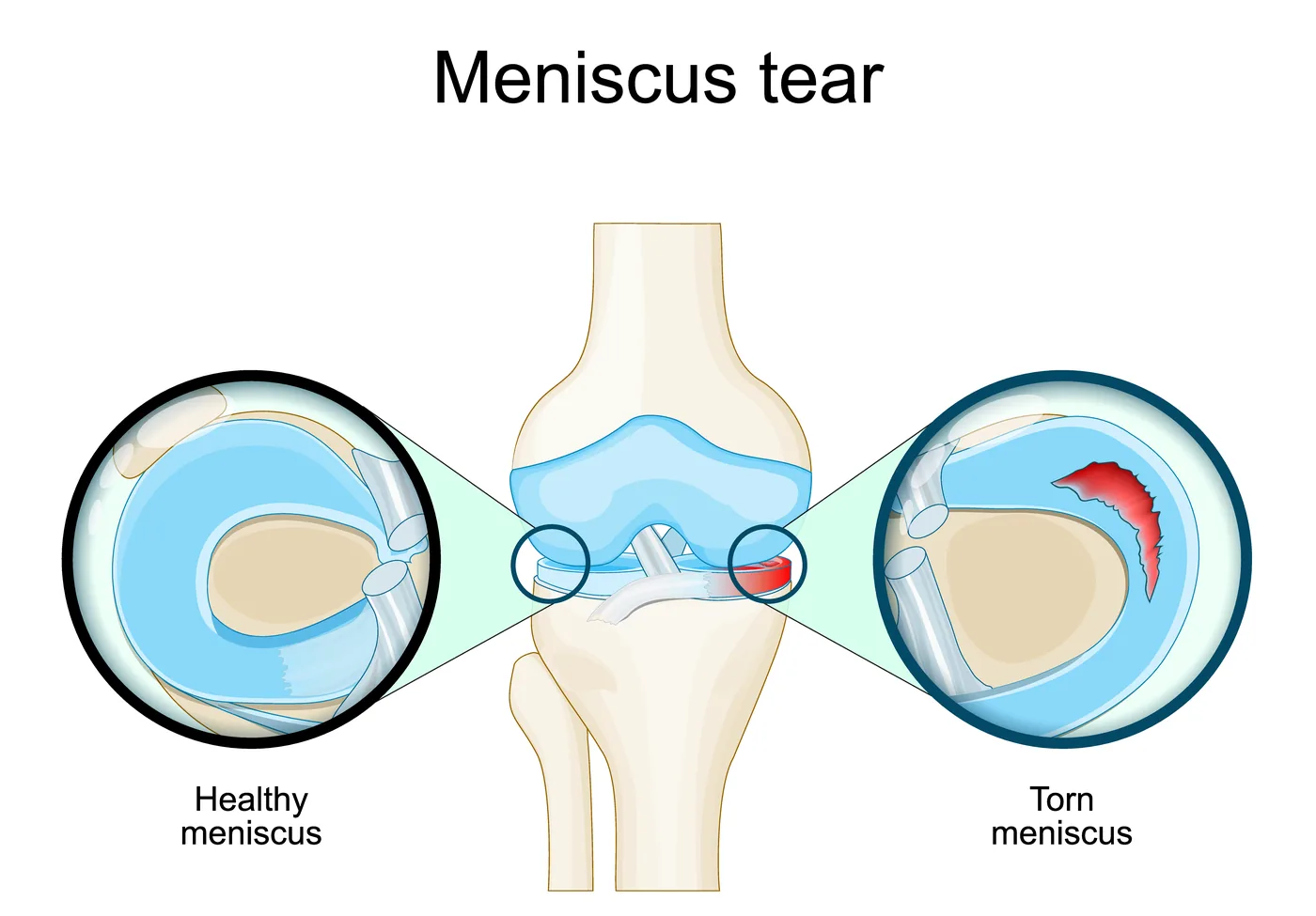
Each knee has two menisci, C-shaped cushions of fibrocartilage that spread load, absorb shock, and stabilize the joint. Tear one, and the knee may catch, lock, swell, or ache along the joint line. Here is the part that matters most and gets said too rarely: the meniscus is worth saving. Removing meniscus tissue relieves symptoms in the short run, but every gram taken increases the load on the cartilage underneath, and long-term studies associate meniscus loss with earlier arthritis. When your tear can be repaired, repair is the better investment.
Repair or Remove? How the Decision Works
Whether a tear can heal depends mostly on blood supply and tear pattern. The outer rim of the meniscus has circulation and healing capacity; the inner edge has little. Vertical tears in the vascular zone, especially in younger patients and alongside ACL reconstruction, are strong repair candidates. Degenerative, frayed inner-edge tears in older knees generally are not, and for many of those, structured physical therapy rather than any surgery is the evidence-supported first step. Dr. Lyons approaches every tear with a repair-first mindset and will tell you plainly which kind you have.
Special Tear Patterns Worth Naming
- Bucket-handle tears: a large flipped fragment that locks the knee; often urgent and often repairable, particularly in young patients
- Root tears: the meniscus tears at its anchor point, which unloads the entire structure; repairing the root can restore its function and is an area of significant advancement in recent years
- Radial tears: once considered unrepairable, select radial tears are now repaired with modern techniques
What Repair Involves
Repair is arthroscopic: the tear edges are prepared and stitched with specialized suture devices, restoring the meniscus’ ring structure. Afterward, healing is protected, expect a period on crutches with a brace and limits on deep bending, before progressing through strengthening and return to activity over several months. Removal recovers faster, but repair preserves the cushion for the long term.
Frequently Asked Questions
What is the difference between meniscus repair and meniscectomy?
Repair stitches the torn meniscus so it heals and keeps working. Meniscectomy trims out the torn portion, which recovers faster but permanently removes cushioning tissue.
Can every meniscus tear be repaired?
No. Repairability depends on the tear’s location, pattern, and tissue quality. Tears in the blood-supplied outer zone are the best candidates; frayed degenerative inner-edge tears usually are not.
Do all meniscus tears need surgery?
No. Many degenerative tears improve with physical therapy and time. Surgery earns consideration for mechanical locking, persistent symptoms despite therapy, or repairable patterns in younger patients.
How long is recovery after meniscus repair?
Typically a protected phase on crutches early on, then progressive strengthening, with return to sport several months out depending on the tear and your activities. Repair timelines run longer than removal timelines because the tissue is healing.
Joint-line pain, catching, or a knee that locks deserves an accurate answer, ideally before someone removes tissue you could have kept. Request an appointment in Renton or Maple Valley.
Take the Next Step
Request an appointment at the Renton or Maple Valley office.