SHOULDER | RENTON & MAPLE VALLEY
Shoulder Labral Repair
Labral repair is arthroscopic surgery that reattaches the torn labrum, the cartilage ring that stabilizes the shoulder socket. It treats Bankart tears from dislocations and SLAP tears at the top of the socket, common in throwers and overhead athletes.
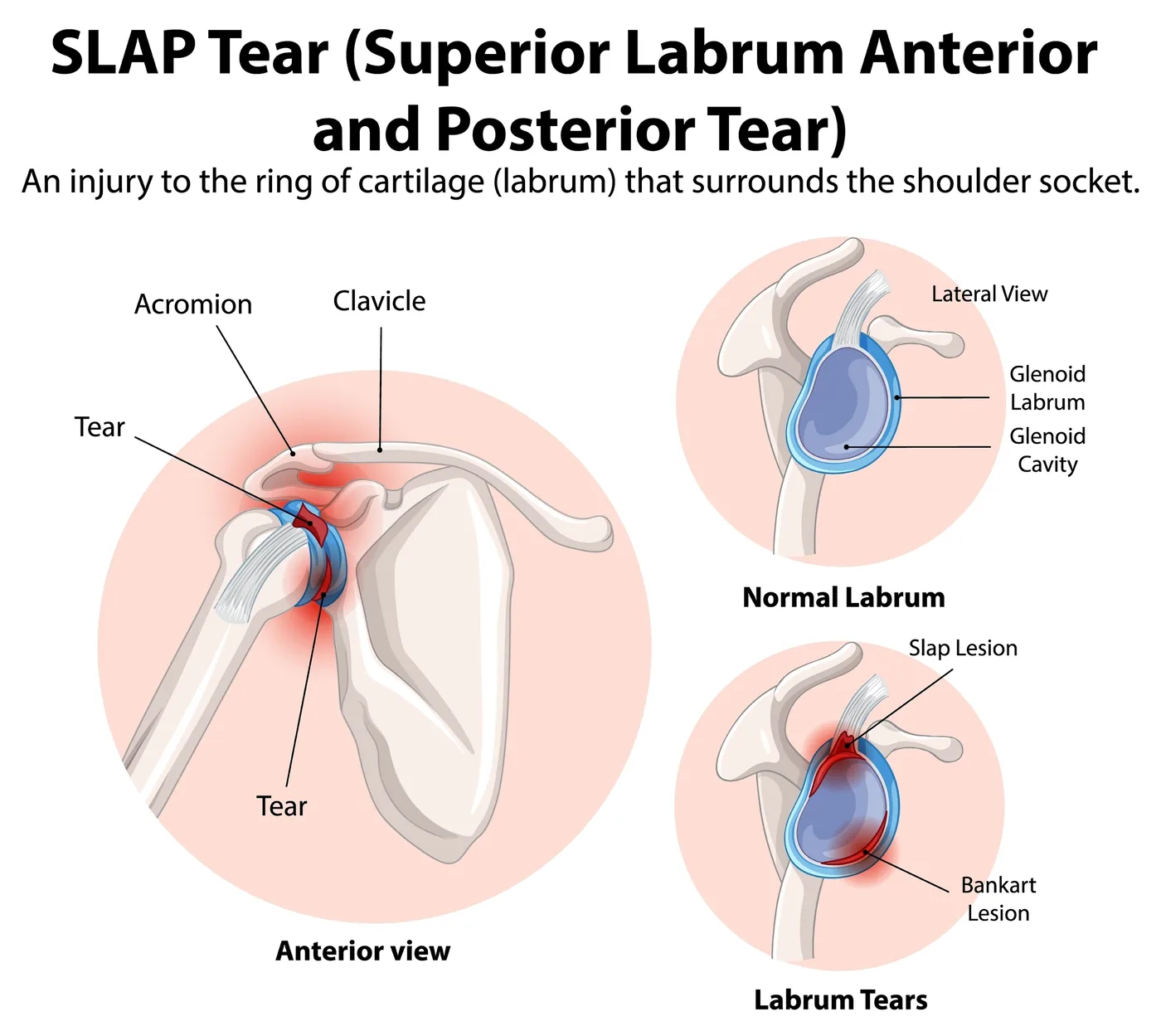
The labrum is the shoulder’s gasket: a fibrous ring around the socket that deepens the joint, anchors ligaments, and gives the long head of the biceps its attachment. Tears show up differently depending on where they occur, a deep ache with overhead work, painful clicking or catching, a sense of looseness, or declining throwing velocity. Because those symptoms overlap with other shoulder problems, labral injuries are frequently missed or mislabeled, and a careful exam paired with high-quality MRI makes the difference.
Types of Labral Tears
Bankart Tears
Tears of the front-lower labrum, almost always from a dislocation. These are the tears behind most shoulder instability; they are covered in depth on the shoulder instability page.
SLAP Tears
Tears at the top of the labrum where the biceps anchors (Superior Labrum, Anterior to Posterior). Common in throwers, climbers, and workers with repetitive overhead load, and also after falls onto an outstretched arm.
Posterior Labral Tears
Tears in the back of the labrum, seen in linemen, pushing athletes, and some laborers. Often subtle on imaging and easy to miss without a directed exam.
How Labral Repair Works
Repair is performed arthroscopically. Through small incisions, Dr. Lyons reattaches the torn labrum to the socket rim with small suture anchors, restoring the bumper and retensioning the capsule as needed. The specifics vary by tear location and pattern, and part of good labral surgery is judgment about what to repair and what to leave alone.
An Important Note on SLAP Tears
Not every SLAP tear should be repaired, and this is an area where the field’s thinking has matured. In some patients, particularly outside the young overhead athlete group, addressing the biceps tendon with a tenodesis produces more reliable pain relief than repairing the labrum itself. Dr. Lyons will explain which approach the evidence supports for someone with your tear, age, and goals, and why.
Recovery
After repair, the shoulder is protected in a sling while the labrum heals to bone, followed by staged motion, strengthening, and sport-specific work. Throwers follow dedicated return-to-throwing progressions late in recovery. Total timelines run several months and vary by tear pattern and sport; you will have a written plan and a therapist guiding each phase.
Frequently Asked Questions
What is the labrum in the shoulder?
The labrum is a ring of fibrous cartilage around the shoulder socket. It deepens the socket, anchors the joint’s ligaments, and serves as the attachment for the biceps tendon.
What is a SLAP tear?
A SLAP tear is a tear of the top portion of the labrum where the biceps tendon attaches. It commonly affects throwing athletes and can cause deep shoulder pain, clicking, and loss of throwing velocity.
Does a labral tear always need surgery?
No. Many labral tears, especially degenerative ones, are managed with therapy and activity modification. Surgery is considered when symptoms persist, instability is present, or an athlete cannot return to their sport.
How long is recovery after labral repair?
Expect a sling in the early weeks and progressive rehabilitation over several months, with return-to-throwing programs extending the timeline for overhead athletes. Your plan will be specific to your tear and sport.
Shoulder catching, clicking, or just not right since an injury? Have it evaluated properly. Request an appointment with Dr. Lyons in Renton or Maple Valley.
Take the Next Step
Request an appointment at the Renton or Maple Valley office.